01
What is Aiya, and why does its pricing look different from Ippodo or Marukyu?
Scale. Aiya was founded in 1888 in Nishio, Aichi — Japan's other premier matcha region, outside Uji — by Aijiro Sugita, whose shop originally sold indigo dye alongside tea. Five generations later, Aiya runs 1,000+ stone mills across four Japanese factories plus six overseas subsidiaries, making it the world's largest matcha manufacturer by volume. That's a different business than Ippodo or Marukyu Koyamaen, both small-batch producers selling their own single estate's output. Aiya was also the first matcha producer to earn JONA organic certification, in 1997, and holds ISO 22000 food safety certification since 2008. All 10 blends we track are in stock as of 2026-09-10, through Aiya's own Japan storefront — it ships from Japan, not a US warehouse.
02
What does Aiya's price ladder look like?
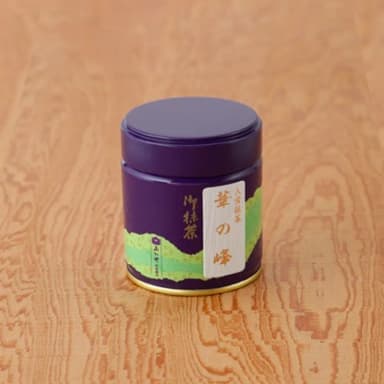
Ten blends, $0.54/g to $2.63/g. Sawa is the floor at $0.54/g. Kaze no Kaori ($0.92/g) and Myogetsu ($0.93/g) sit just above it. Shinen no Shiro ($1.18/g) is the midpoint. Seisho no Mukashi ($1.50/g) and Jingo no Mukashi ($1.57/g) form the upper-mid tier. Ten no Midori ($1.69/g) and Shoen no Mukashi ($1.79/g) are Aiya's premium pair. Hana no Mine, at $2.63/g, is the ceiling — nearly five times Sawa's price within the same brand.
03
Why doesn't Aiya show flavor scores like Ippodo and Marukyu do?
Because we have no sourced tasting notes for it. We have scored 73 blends site-wide out of 595 tracked — a curated subset, not the whole catalog. Aiya's 10 blends aren't in that subset yet. That's a gap in our data, not a claim about Aiya's quality one way or the other. Don't read a missing score as a bad score; it's an untested one.
04
Is Aiya worth buying without flavor scores to go on?
The signal here isn't flavor — it's consistency. JONA organic certification since 1997, ISO 22000 since 2008, and four factories running the same stone-mill process at volume point to a producer that doesn't have quality-control surprises, even if we can't yet tell you what Ten no Midori tastes like next to Marukyu Wako. If you want a scored recommendation, buy from the three brands we've scored. If you want organic certification history and don't need our scores to decide, Sawa at $0.54/g is the lowest-risk way to find out for yourself.